
Investing in Real Estate in Morocco or Dubai: Full 2026 Comparison
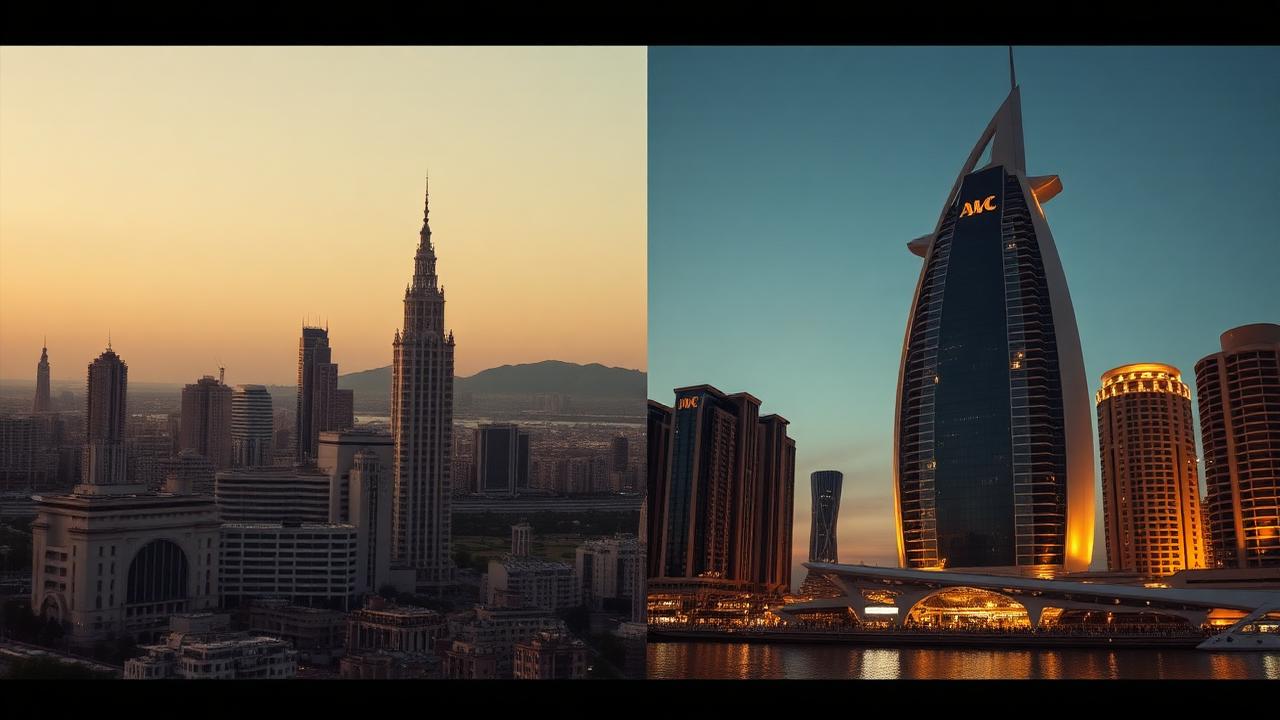
Many Moroccan buyers hesitate between growing their local property portfolio and diversifying into Dubai. There is no one-size-fits-all answer: it all depends on your objectives, timeline, and risk tolerance. This guide lays out objective benchmarks, without turning the exercise into a sales pitch.
Key Differences Between the Two Markets
Moroccan property is a market you know, denominated in Moroccan dirhams, close to home, and backed by a familiar legal and tax framework. Dubai is a global hub, traded in UAE dirhams pegged to the US dollar, offering strong liquidity in select segments, yet geographically distant and driven by distinct cycles. Comparing both is primarily an assessment of two different risk profiles.
Tax Considerations
Dubai levies no personal income tax, no tax on individual rental revenues, and no capital gains tax on property sales; transaction costs mainly involve property transfer fees paid to the Dubai Land Department (typically 4%, plus standard administrative charges). In Morocco, rental proceeds and property sales are taxed under the General Tax Code, with specific regimes and allowances depending on individual circumstances.
Keep in mind: zero local tax in Dubai does not waive your obligations in your country of tax residence. Read our Dubai property tax guide and our article on the Golden Visa and Moroccan taxation.
Rental Yields
Gross yields observed in Dubai typically range between 5% and 8% depending on the district and unit type, based on figures published by major market platforms. In Morocco, gross yields on urban residential units are generally lower, with notable variations across cities, neighborhoods, and rental formats. We break down the figures in our article on rental yields in Dubai vs Casablanca, Marrakech, and Rabat.
An often overlooked point: net rental yield hinges on service charges, occupancy rates, and property management fees, which vary significantly between the two destinations.
Currency and Market Exposure
The UAE dirham has been pegged to the US dollar at a fixed rate since 1997. Buying property in Dubai effectively exposes your portfolio to the dollar. For assets fully denominated in Moroccan dirhams, this offers currency diversification; however, it also presents exchange rate risk if your future capital requirements remain in MAD.
Liquidity and Resale
- Dubai: highly active market, strong transaction volumes, global buyer demand, though competitive pressure exists across select off-plan developments.
- Morocco: slower resale cycles depending on the city and market tier, with longer marketing periods for some listings.
- In both markets, resale speed depends primarily on location and listing price rather than the country alone.
Practical Steps and Day-to-Day Management
In Morocco, you buy locally: no foreign currency transfers, no language barriers, and familiar closing procedures. In Dubai, cross-border acquisitions are common among expatriates, buyers holding offshore assets, or those utilizing developer payment plans; these involve remote developer due diligence and local property management. While manageable, this requires dedicated time and oversight.
Residency Privileges
Securing real estate in Dubai can provide eligibility for a UAE residency visa, a feature a domestic purchase in Morocco naturally does not offer to local buyers. Read our Golden Visa guide and our overview of the 2-year investor visa.
Which Profile Fits Which Market?
- Primary residence or regular family use in Morocco: a domestic purchase remains the most logical route.
- Focus on rental returns and currency diversification with a mid- to long-term horizon: Dubai warrants serious consideration.
- Low tolerance for cross-border administration and currency shifts: prioritize the market you already master.
- Existing real estate heavily concentrated in a single country: geographic diversification is an effective safeguard.
Key Takeaway
This is not a competition. Morocco provides familiarity and control; Dubai offers a tax-free framework, appealing yields, and currency diversification, balanced by cross-border logistics. The best move is the one aligned with your broader property plans, not short-term market noise.
Frequently asked questions
Are rental yields genuinely higher in Dubai than in Morocco?+
Average gross rental yields in Dubai typically surpass those of urban residential units in Morocco, though actual returns rely heavily on the district, unit layout, and service charges. Net yields remain the decisive metric.
Is acquiring property in Dubai riskier?+
The risks differ: foreign exchange exposure, cross-border distance, broader market cycles, and developer vetting in Dubai; contrasted with longer resale periods and lower yields in specific Moroccan property segments.
Can you own property in both markets?+
Yes, combining both reflects a sound geographic diversification approach: maintaining a local base while expanding internationally, balanced against your personal budget and horizon.
Should you sell property in Morocco to buy in Dubai?+
This is neither necessary nor usually recommended. Real estate diversification means spreading holdings across locations, not fully replacing one market with another.